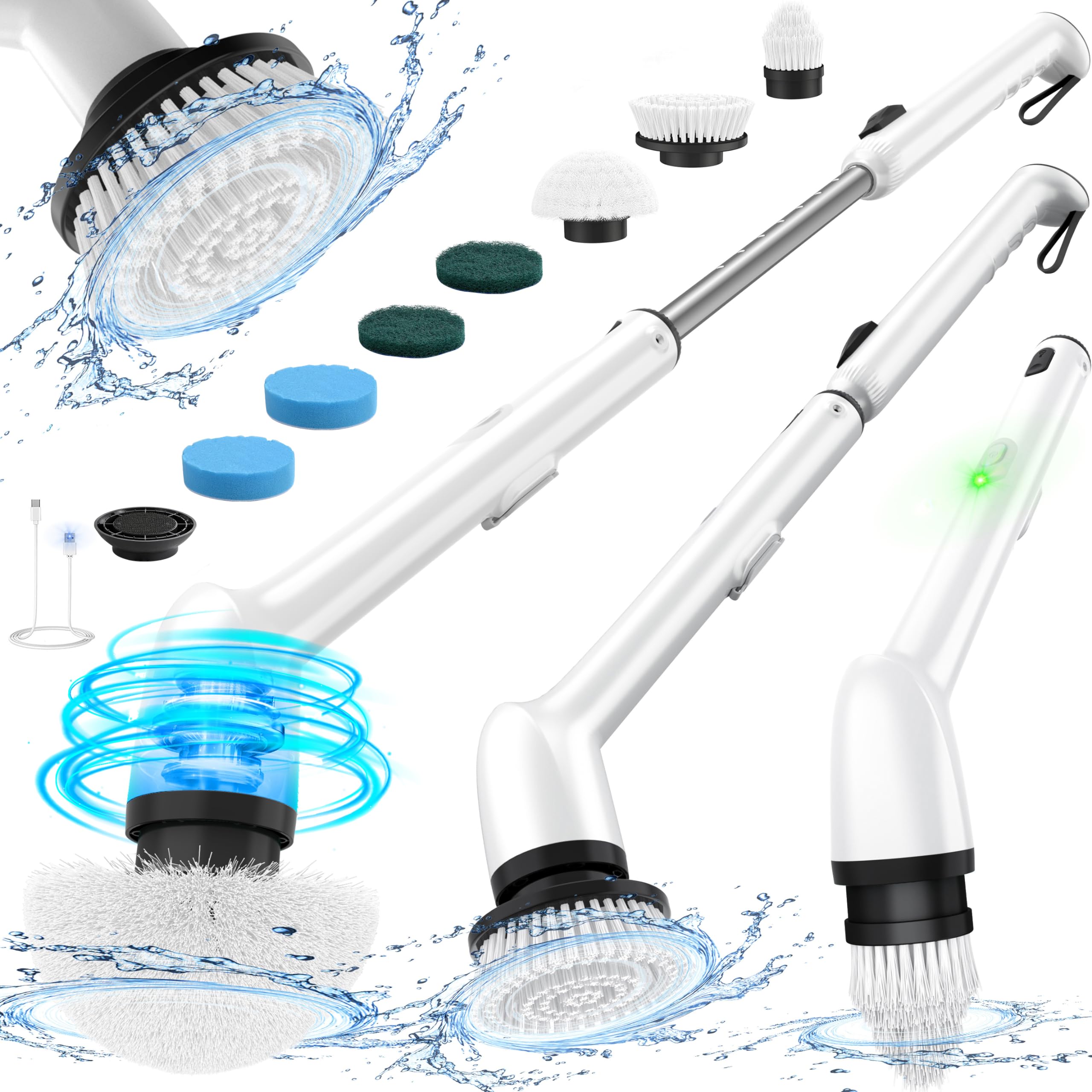
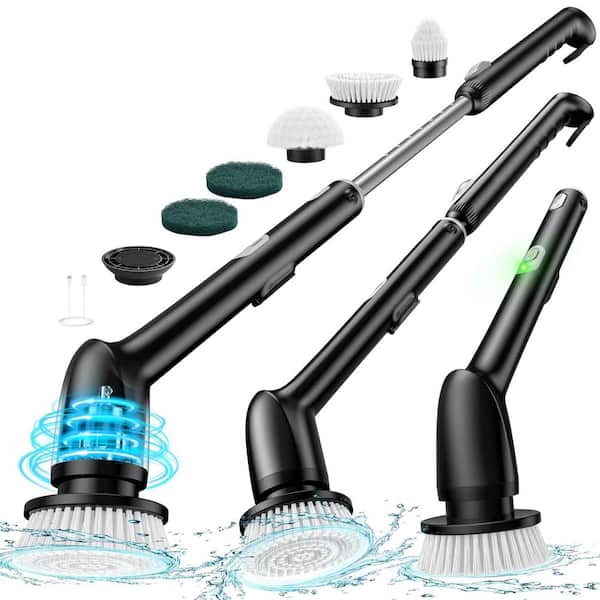
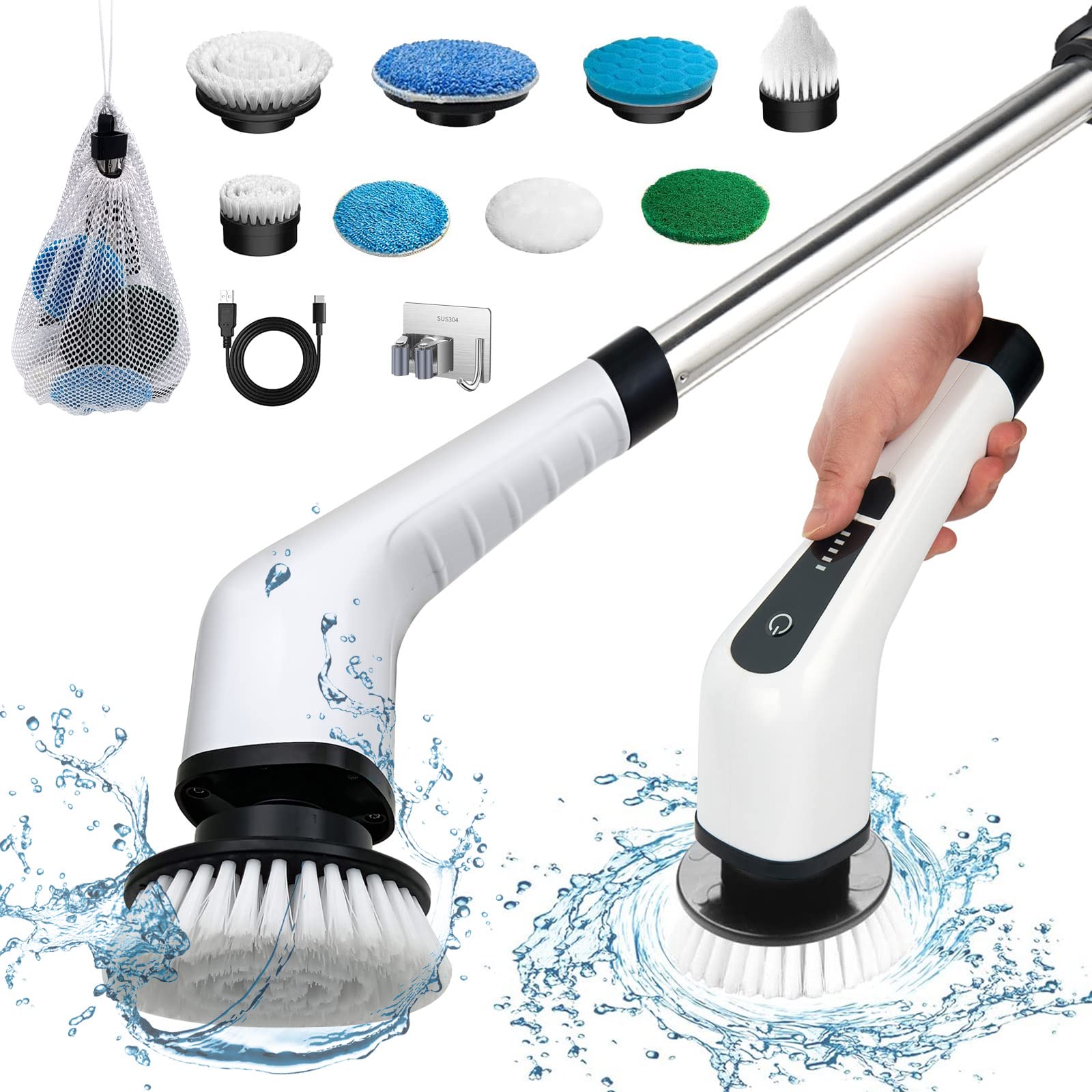
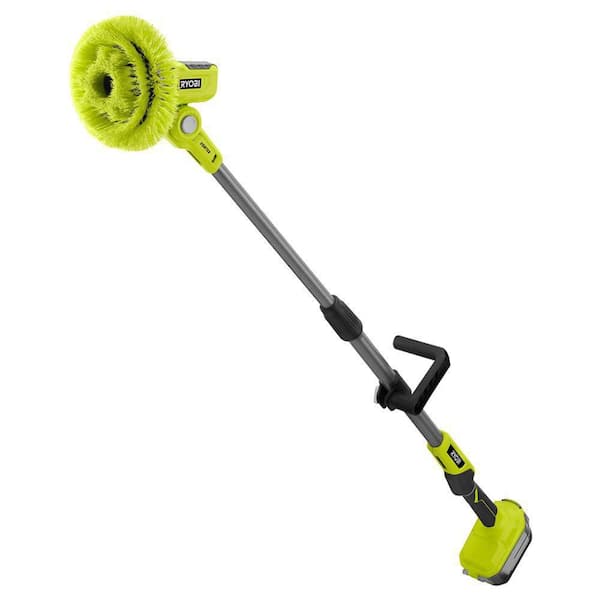
Discover everything you need to know about electric spin scrubbers — the revolutionary cleaning technology transforming how households tackle tough grime, soap scum, and stubborn stains without the backbreaking effort of manual scrubbing.
Learn More About UsModern cleaning technology has transformed household chores from exhausting manual labor into efficient, effortless tasks.
Electric spin scrubbers represent one of the most significant advancements in household cleaning technology in recent decades. These motorized cleaning devices use high-speed rotation to deliver consistent, powerful scrubbing action that would be physically impossible to replicate by hand — and they do it without causing the joint strain and muscle fatigue associated with traditional scrubbing methods.
The principle behind electric spin scrubbers is elegantly simple: a powerful motor drives a rotating brush head at speeds typically ranging from 300 to 500 RPM, generating centrifugal force that dramatically amplifies the cleaning power of any brush or pad attached to the device. This rotational energy breaks down soap scum, mineral deposits, mold, mildew, and general grime far more effectively than back-and-forth manual scrubbing.
At Synoshi PRO, we are dedicated to providing comprehensive, expert information about electric spin scrubbers — helping consumers understand the technology, compare options, and get the most out of their cleaning tools.
Maximum rotation speed of premium electric scrubbers
Less physical effort required compared to manual scrubbing
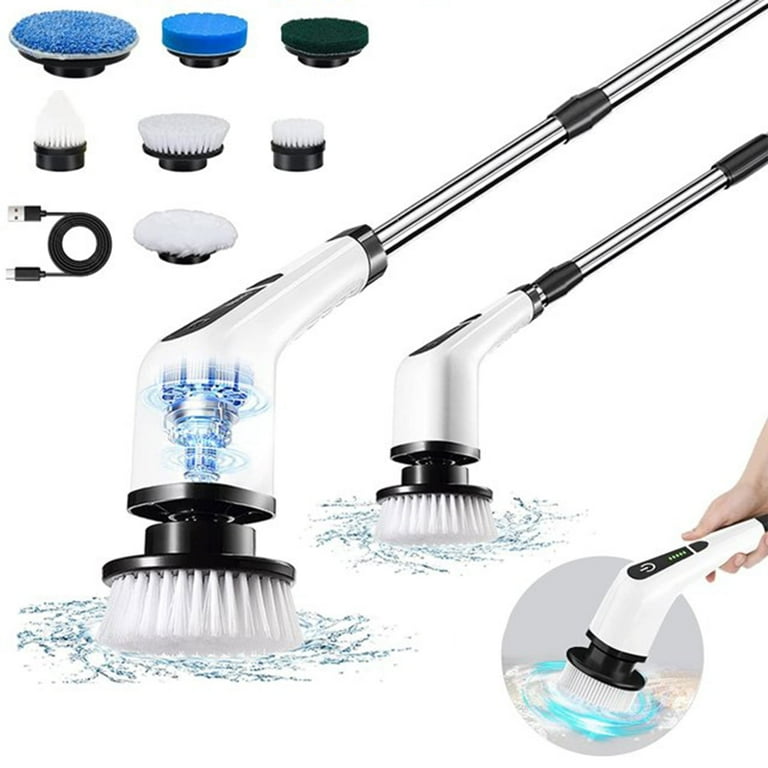
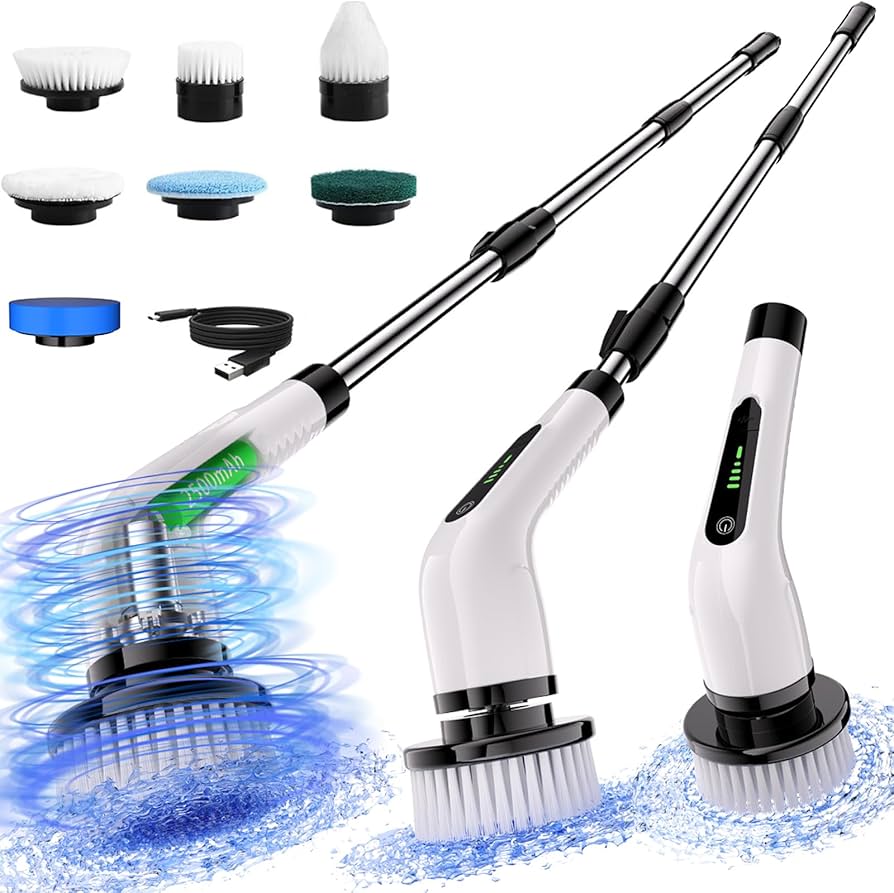
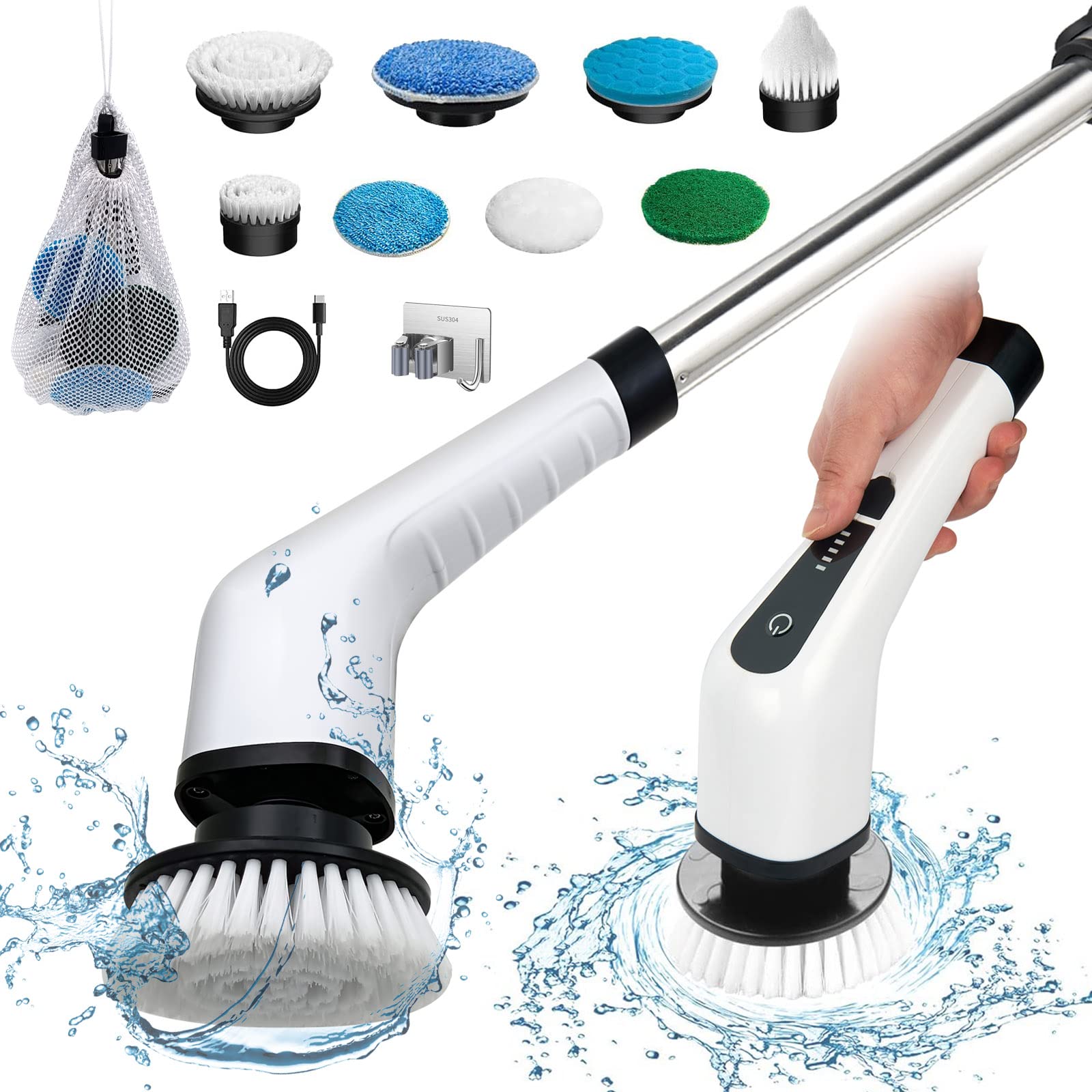
Interchangeable brush heads for different surfaces and tasks
Typical battery life on a single charge for cordless models
Understanding the technology behind these powerful cleaning tools helps you use them more effectively.
At the heart of every electric spin scrubber is a brushless DC motor that converts electrical energy into rotational mechanical energy. Modern cordless scrubbers use lithium-ion battery technology to power these motors, providing consistent torque throughout the battery's charge cycle rather than the diminishing power output characteristic of older nickel-cadmium batteries.
The motor drives a central shaft that connects to the brush head attachment point. Most quality scrubbers use a universal attachment system that allows multiple brush heads to be quickly swapped without tools. The brush head rotates at a fixed speed or, in dual-speed models, at one of two preset speeds optimized for different cleaning intensities.
The telescoping handle — a feature found on most modern electric scrubbers — allows the user to adjust the working length from approximately 24 inches to 47 inches or more, enabling comfortable cleaning of floor tiles without bending over, reaching high shower walls without a step stool, and accessing tight spaces behind toilets and under vanities.
Waterproofing is a critical feature for bathroom and kitchen applications. Quality electric scrubbers carry IPX7 waterproof ratings, meaning they can be fully submerged in water up to one meter deep for 30 minutes without damage — providing confidence that splashing and wet surfaces will not compromise the device.
Electric spin scrubbers excel across a wide range of surfaces and cleaning challenges throughout the home.
Grout lines are notorious for harboring mold, mildew, and soap scum that resist conventional cleaning methods. The concentrated rotational force of an electric scrubber's narrow grout brush penetrates these recessed areas with remarkable effectiveness. What might take an hour of painful manual scrubbing can often be accomplished in 15 minutes with an electric scrubber, with superior results and far less physical strain on wrists, elbows, and shoulders.
The curved surfaces of bathtubs and the vertical walls of shower enclosures present ergonomic challenges for manual cleaning. Electric scrubbers with flexible or angled heads conform to these curved surfaces, maintaining consistent contact and cleaning pressure across the entire surface area. The extended handle allows users to clean the full height of shower walls without awkward reaching or climbing.
Baked-on grease, food residue, and mineral deposits from hard water make kitchen cleaning particularly challenging. Electric scrubbers equipped with stiff-bristle or abrasive pad attachments cut through these stubborn deposits on stovetops, oven interiors, sink basins, and tile backsplashes. The controlled rotation prevents the scattering of debris that often occurs with aggressive manual scrubbing.
Beyond the bathroom and kitchen, electric scrubbers prove invaluable for outdoor cleaning tasks. Patio pavers, deck boards, concrete driveways, and garage floors all benefit from the powerful scrubbing action these devices provide. Paired with appropriate cleaning solutions, an electric scrubber can restore weathered outdoor surfaces to near-original condition in a fraction of the time required by manual methods.
The versatility of electric spin scrubbers is largely determined by the range and quality of available brush head attachments. Understanding which brush type is appropriate for each cleaning task is essential for achieving optimal results without damaging delicate surfaces.
Round flat brushes are the most versatile attachment, suitable for general cleaning of flat tile surfaces, countertops, and floors. Their broad contact area covers large surfaces quickly and efficiently. Stiff-bristle versions tackle heavy-duty grime, while soft-bristle versions are appropriate for more delicate surfaces like natural stone or polished fixtures.
Corner brushes feature a conical or triangular profile designed to reach into 90-degree angles where flat brushes cannot maintain contact. These are invaluable for cleaning the corners of showers, the junction between floor and wall tiles, and the base of toilets. Grout brushes are narrow cylindrical attachments specifically sized to fit within grout lines, concentrating the rotational force exactly where it is needed most.
Sponge pad attachments provide a gentler cleaning action suitable for polished surfaces, glass shower doors, chrome fixtures, and other surfaces that could be scratched by bristle brushes. These pads are also effective for applying and buffing cleaning solutions into surfaces for enhanced chemical cleaning action.
Maximize the effectiveness of your electric scrubber with these professional techniques.
Apply your cleaning solution and allow it to dwell on the surface for 5 to 10 minutes before scrubbing. This pre-soak time allows the cleaning chemistry to penetrate and begin breaking down deposits, dramatically reducing the mechanical effort required and improving overall cleaning results. For heavily soiled surfaces, a longer dwell time of 15 to 20 minutes may be beneficial.
Rather than scrubbing randomly across a surface, work in overlapping sections using a consistent pattern — either horizontal rows or vertical columns. This systematic approach ensures complete coverage, prevents missing spots, and allows you to track your progress. For large surfaces like shower walls, divide the area into manageable zones and complete each zone before moving to the next.
For dual-speed scrubbers, use the lower speed setting for delicate surfaces, applying cleaning solutions, and working with sponge pad attachments. Reserve the higher speed for heavy-duty scrubbing of tile, grout, and concrete. Starting at lower speed and increasing if needed helps prevent accidental damage to surfaces you are unfamiliar with.
During extended cleaning sessions, periodically rinse the brush head under running water to remove accumulated grime and cleaning solution residue. A clogged brush head loses cleaning effectiveness as the bristles become matted with debris. Regular rinsing maintains consistent performance throughout the cleaning session and extends the life of the brush head.
For cordless electric scrubbers, develop good battery management habits to maximize operational life. Avoid allowing the battery to fully discharge before recharging, as deep discharge cycles reduce long-term battery capacity. Most modern lithium-ion batteries benefit from being kept between 20% and 80% charge for everyday use, with occasional full charge cycles for battery calibration.
After each use, rinse all brush heads thoroughly and allow them to air dry completely before storage. Periodically inspect the attachment point for debris accumulation and clean as needed. Store the scrubber with the brush head detached to prevent moisture from being trapped between the attachment and the motor housing, which can lead to mold growth and corrosion over time.
One of the most fundamental decisions when selecting an electric scrubber is choosing between corded and cordless designs. Each approach offers distinct advantages and trade-offs that make different models more suitable for different users and applications.
Corded electric scrubbers deliver consistent, unlimited power as long as they are connected to an electrical outlet. This makes them ideal for extended cleaning sessions, commercial applications, and situations where maximum power is required. The trade-off is reduced mobility — the power cord limits range of movement and can become tangled or interfere with cleaning in confined spaces.
Cordless models offer complete freedom of movement, allowing you to clean anywhere without worrying about outlet proximity or cord management. Modern lithium-ion batteries provide sufficient runtime for most household cleaning sessions, typically 60 to 90 minutes on a single charge. The limitation is that battery capacity decreases over time, and extended cleaning projects may require mid-session recharging or a spare battery.
For most household users, a cordless model with a high-capacity battery represents the best balance of convenience and capability. For commercial cleaning professionals or users with extensive hard surface areas to maintain, a corded model's unlimited runtime may justify the reduced mobility.
See the range of electric scrubber designs and applications available today.
Contact Synoshi PRO
Email: [email protected]
Address: 850 Clean Tech Boulevard, Suite 220, Portland, OR 97201, United States